For businesses in the UAE, where sustainability initiatives and green building standards are gaining momentum, facility management has become an essential driver of ESG success. Through smart technologies, energy-efficient operations, and data-driven decision-making, facility managers help organizations achieve both operational excellence and sustainability goals.
The Difference Between Compliance and Sustainability
Compliance involves meeting mandatory legal and regulatory requirements, such as health and safety standards, environmental regulations, and building codes. While compliance protects organizations from legal risks, sustainability goes further by promoting continuous improvement in environmental, social, and governance performance.
Facility management bridges the gap by implementing proactive strategies that reduce environmental impact, improve workplace conditions, and optimize resource use. Instead of simply meeting minimum standards, organizations can create long-term value through sustainable building operations.
Shift from Compliance to Sustainability
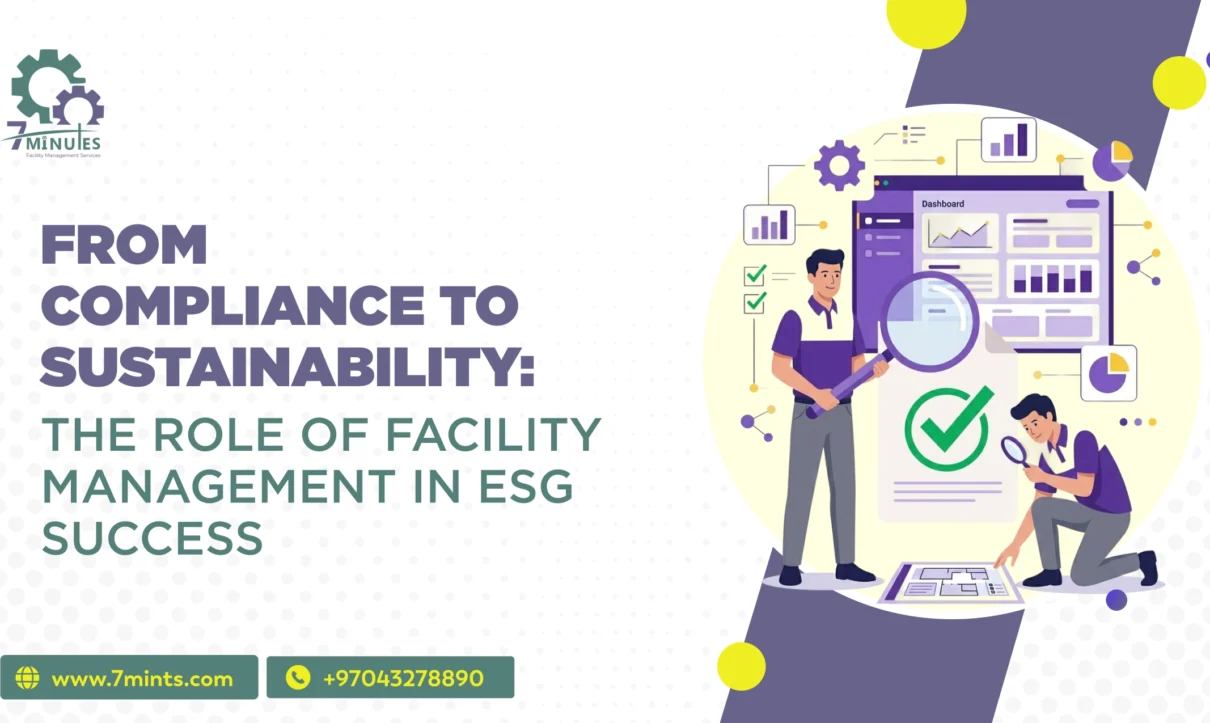
Compliance focuses on meeting legal and regulatory requirements, such as adhering to safety standards, environmental regulations, and building codes. While these obligations remain important, sustainability goes further by encouraging organizations to continuously improve their environmental and social performance.
Facility management bridges this gap by implementing practices that not only ensure compliance but also reduce resource consumption, improve operational efficiency, and create healthier workplaces. This proactive approach helps businesses achieve measurable ESG outcomes while preparing for future regulatory and market expectations.
Check out our latest blog post on ESG Compliance Made Simple: A Facility Management Guide for UAE Businesses
How Facility Management Supports the Environmental Pillar
1. Improving energy efficiency
Energy consumption is a pretty big environmental issue for a lot of organizations. Facility managers can improve efficiency by upgrading lighting systems, optimizing HVAC performance, and implementing smart building technologies in general. With these kinds of upgrades, there is less wasted energy, and the operational expenses go down, too. Energy-efficient facilities really matter if the goal is to hit sustainability targets
Also, keeping an eye on energy performance helps facility managers spot where the biggest improvements could happen. Regular maintenance keeps equipment working at peak efficiency, and it also prevents excessive energy consumption, which is kind of the point. When energy use drops, greenhouse gas emissions usually drop along with it, and that supports the environmental objectives. At the same time, organizations tend to see major cost savings
2. Reducing Waste and Promoting Recycling
Waste management counts as a key part of sustainable facility operations. Facility managers can introduce recycling programs, cut down on paper use, and encourage responsible waste disposal habits. These steps help organizations shrink the amount of waste that ends up in landfills. They also help build a work culture where employees take environmental responsibility seriously
Solid waste reduction strategies also boost resource efficiency and bring disposal costs lower. Facility managers might work together with suppliers and service providers to reduce packaging waste and to reinforce the recycling efforts. Small adjustments in multiple areas do add up, and the environmental gains can be surprisingly significant. That all supports a company’s ESG performance, plus its sustainability reputation
3. Managing Water Conservation
Water conservation has become more and more important because businesses are trying to keep up with sustainable resource management, and honestly, it’s kinda tricky at times. Facility managers can put in water-efficient fixtures, keep an eye on water usage, and react pretty fast when leaks show up. These steps help lower total water consumption without really disrupting the everyday rhythm of operations. On top of that, conserving water supports wider environmental protection efforts, which still matters even after you leave the facility gates.
Reducing water waste is also a clear win for both the planet and the organization’s budget. When the amount of water used falls, utility costs often follow, and resource efficiency gets better too. Facility managers can additionally teach employees about smarter and more responsible water habits. Taken together, all of that strengthens long-term sustainability, and it can help the ESG scorecard look stronger.
4. Enhancing workplace health and safety
Employee health and safety sit right at the center of the social pillar of ESG. Facility managers are basically expected to maintain safe surroundings and reduce workplace hazards.
Facility managers typically refresh safety procedures, and they check that everything stays compliant with the relevant regulations. Their work cuts down on workplace accidents and supports well-being across the board. Organizations that treat health and safety as a priority show something tangible about social responsibility, not only the paperwork.
Technology’s role in ESG-focused facility management
1. Smart building systems
Smart building technologies help facility managers sort of see what’s going on in real time, and they can monitor building performance as it happens. With sensors, automation systems, and various connected devices, they end up getting useful data on things like energy usage, how many people are around, and even the environmental conditions inside. That stream of information makes it easier to spot inefficiencies and tune up how resources are managed, basically. In many sustainability strategies, smart buildings really matter, because they make it simpler to stay aligned with environmental targets
These systems let organizations automate everyday processes, like lighting, heating, and cooling. When the controls are automated, unnecessary energy consumption can drop, and operational efficiency improves. Facility managers then use real-time data insights to make better decisions. So in the end, smart technologies support both environmental goals and those cost reduction efforts, at the same time
2. Data Collection and ESG Reporting
Accurate data is a must if organizations want to measure ESG performance and also track progress toward sustainability goals without guesswork. Facility managers collect details tied to energy consumption, water usage, waste generation, and maintenance activities. This information creates a clear picture of how operations are going, and it also helps organizations pinpoint where improvements are needed or where the weak spot is
Reliable reporting is getting more important because investors and regulators are asking for greater transparency. Facility managers help a lot by making sure the data is accurate and consistent; without it, the whole story kind of falls apart. When ESG metrics are well documented, organizations can show accountability more clearly and point to sustainability achievements that are actually verifiable. Plus, good reporting habits make it easier to do smarter decision-making and even future planning, not just last quarter.
3. Predictive Maintenance
Predictive maintenance basically relies on advanced technologies to catch equipment troubles before real failures happen. With sensors plus analytics tools, asset performance gets monitored continuously, and trends show up early enough to act on. That means facility managers can handle issues proactively rather than waiting and reacting. Because of this, equipment reliability tends to rise, and operational efficiency improves in a pretty noticeable way.
Avoiding those sudden breakdowns does two things: it helps cut repair costs and also stretches the lifespan of important assets. Predictive maintenance also cuts down energy waste that comes from equipment that is poorly functioning. When resource use is optimized, organizations can support environmental goals, plus governance objectives, too. So yeah, it matches nicely with ESG-oriented operational strategies, not as an add-on but as part of the plan.
Moving Beyond Compliance Toward Sustainability
1. Adopting Long-Term Sustainability Strategies
In the past, traditional facility management often meant focusing mostly on meeting legal and regulatory requirements. Nowadays, organizations are understanding that they need broader sustainability strategies that actually create long-lasting value. Facility managers are getting more involved in shaping initiatives that support environmental and social objectives. This shift helps companies move beyond mere compliance and into something more meaningful.
2. Supporting Green Building Certifications
Green building certifications, like LEED and BREEAM, really highlight environmentally responsible building practices. In practice, they show a company’s dedication to sustainability and efficient use of resources, not just the marketing part. When a building earns certification, it can lift brand reputation, and it can also pull in stakeholders who are more environmentally minded. Plus, there’s a built-in framework for ongoing refinement and better decisions over time.
Facility managers take on an essential kind of responsibility here. They watch how the building performs, coordinate maintenance, and keep an eye on compliance with sustainability standards. It’s their day-to-day work that helps preserve certification status and keeps environmental benefits from fading. In other words, green certifications end up supporting ESG objectives while also strengthening business credibility.
3. Engaging Employees in Sustainability
Employee involvement is essential for the success of sustainability initiatives, and honestly, it can feel kind of small until you see the results. Facility managers can nudge participation through awareness campaigns, training programs, and simple workplace sustainability activities. When employees understand how ESG goals connect to real day-to-day work, they are more apt to switch into responsible habits. This kind of engagement helps build a more resilient sustainability culture across the organization, rather than just ticking a box once.
Even simple actions like cutting down energy use, recycling the right way, and conserving resources can end up making a big difference. Facility managers reinforce these behaviors with clear communication and ongoing support. When employees actually participate, sustainability programs work better, and the whole push for social responsibility strengthens. In the end, a collaborative approach usually leads to better ESG outcomes, not only nicer reports.
Benefits of ESG-Driven Facility Management
1. Reduced Operating Costs: Sustainable facility management often results in noticeable cost savings. Energy-efficient systems, waste reduction programs, and water conservation measures help reduce day-to-day operational expenses. Those savings can then be reinvested into more sustainability initiatives or used for other business growth opportunities. Cost efficiency is one of the most compelling benefits of ESG-focused facility management, even for teams that care mostly about budgets.
Facility managers keep looking for chances to streamline resource use and reduce waste. Their work improves financial performance while still supporting environmental objectives. Organizations often see lower utility bills, less maintenance overhead, and better asset efficiency. That blend of economic and ecological gains tends to create long-term value, which is probably why leadership keeps paying attention.
2. Stronger Corporate Reputation: Businesses with strong ESG performance often end up with a better reputation among customers, investors, and stakeholders. Showing commitment to sustainability and responsible operations can make a company stand out from other firms, maybe in a quiet but real way. A favorable reputation tends to bring more customer loyalty and a steadier level of investor confidence. This is especially relevant in today’s more socially aware business environment.
Facility management actually helps with reputation building by making sure sustainability initiatives are carried out in a practical way, not just written down somewhere. When people can see improvements in environmental results and day-to-day workplace quality, it reflects well on the organization. Stakeholders increasingly care about companies that take ESG duties seriously. Strong facility management supports these expectations and also reinforces corporate image over time.
3. Better Regulatory Compliance: Regulatory requirements around environmental protection and workplace safety keep moving forward, and that’s the point. Facility managers assist organizations with staying compliant by tracking rules and rolling out the required adjustments. Their proactive style can lower the chances of legal trouble and costly financial penalties. Compliance, in addition, backs up good governance practices.
Staying compliant is also a signal of accountability and careful management. Facility managers make sure records are correct and that day-to-day procedures match what’s required. Their efforts help organizations handle audits and inspections without much scrambling. Solid compliance habits also feed into overall ESG success in a very direct sense.
Conclusion
In many ways, facility management has kind of turned into a strategic role that really matters for ESG results. It’s not only about keeping buildings running. Managers work on energy efficiency, cut waste, reduce water use, support workplace safety, and bring in smarter technology.
These actions help organizations meet sustainability targets, and they go further than just “passing” compliance checks. In other words, they also back up the longer-term environmental, social, and governance aims. Contact us as because ESG expectations keep growing; facility management is becoming more and more important.
When companies invest in ESG-minded facility management, they’re more ready for what comes next. Sustainable operations can lower costs, protect reputation, strengthen compliance, and even lift employee satisfaction. That shift, from bare minimum to sustainability plans, helps create durable value for stakeholders.