The facility service field has expanded its reach to include technology deployment and sustainability initiatives and strategic planning in addition to its previous tasks of maintenance and cleaning work. The commercial and residential space shift needs to achieve operational improvements, which will result in reduced costs and better customer experiences. Facility management business growth requires organizations to use facility management as a core component, which enables them to sustain their business operations.
The facility management industry will experience a major increase in demand for innovative solutions during 2026 because urban areas will grow and organizations will embrace digital technology. Companies are focusing more on long-term asset value rather than short-term fixes because they believe facility management represents a valuable investment. Early market adopters of these changes will create a significant competitive advantage against their business competitors.
-
Technology-Driven Facility Management
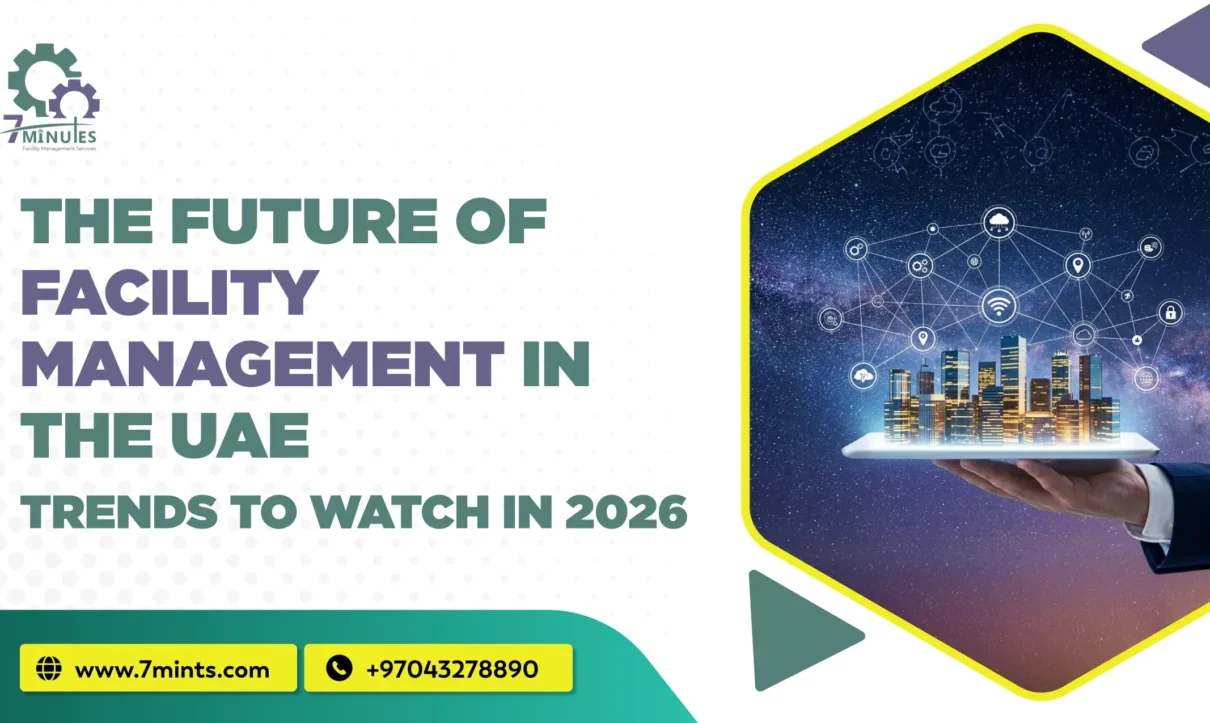
Technology serves as the essential driving force that controls every component of facility management operations in the United Arab Emirates. The technology streamlines operational processes while enhancing transparency throughout facility management activities. Facility managers use IoT sensors together with cloud platforms and automation systems to track their assets during active operations.
The system enables organizations to streamline their workflows while detecting problems that need urgent attention before they become major operational obstacles. The system enables organizations to achieve better operational performance while decreasing their expenses and operational interruptions, which do not contribute to their business.
The modern building design includes intelligent building systems, which architects now consider essential for all contemporary buildings. The systems use live data to automatically adjust their lighting systems, air conditioning units, and security systems according to actual building usage. The system enables buildings to consume less energy while providing better comfort and safety standards for their users. The implementation of these technologies will become a business requirement that companies must meet to maintain their market strength in 2026.
-
Predictive and Proactive Maintenance
The field of facility management has undergone a complete transformation because predictive maintenance has replaced traditional methods of maintenance, which relied on reactive maintenance. Organizations use data and artificial intelligence to predict equipment problems before they occur rather than waiting until their equipment breaks down. The system helps organizations reduce unplanned equipment failures while ensuring that maintenance activities take place during appropriate periods. The system allows companies to avoid expensive repairs, which would shorten their equipment’s lifespan.
The advanced monitoring systems operate by gathering equipment data, which they use to identify normal operational patterns and equipment errors. The system enhances operational reliability through improved safety measures, which extend to all facility areas. The implementation of predictive maintenance will become essential for organizations by the year 2026.
-
Rise of Integrated Facility Management
Businesses are turning to integrated facility management, which has become an effective method to manage their facilities. Organizations now prefer to work with one service provider who will manage all their facility needs instead of having multiple service providers. The system provides both hard services, which encompass maintenance work, and soft services, which include cleaning work and security protection. The system enhances coordination capabilities while maintaining consistent service delivery to customers.
Facility Management improves operational efficiency because it unifies all operational functions through its single management platform. Organizations can track their operational performance while they sustain required quality standards and meet regulatory obligations. The system results in cost reductions through two benefits, which include eliminating repetitive work and better utilizing available resources. Large organizations with complex infrastructure requirements will choose IFacility Management as their main operational model by 2026.
-
Sustainability and ESG Compliance
Organizations now consider sustainability their primary goal in facility management because they want to achieve their environmental objectives. The UAE government implements stringent regulations to enforce environmental commitments that businesses must follow to establish sustainable operations. Facility managers now need to implement strategies that will decrease energy usage while they work to cut down waste production and safeguard water resources. The initiatives provide dual advantages because they protect the environment while decreasing operational expenses over time.
Environmental, Social, and Governance (ESG) compliance has become a fundamental component of facility management operations. Corporations must establish sustainability tracking systems, which will enhance their accountability through performance reporting. Organizations use advanced technologies to track energy consumption while they manage renewable resources.
-
Data-Driven Decision Making
Data analysis has become an essential resource for facility management, which helps organizations make better decisions. Facility managers can now utilize advanced data, complete with information about energy consumption, room occupancy, and equipment functioning. The data enables them to discover operational weaknesses while they develop solutions for better operational performance. The operational processes help companies establish more effective management systems. Check out our latest blog post on Smart Pest Monitoring Technologies Used in the UAE
-
Focus on Occupant Experience
Modern facility management is primarily oriented towards enhancing the experiences of all individuals who use the facility. This includes employees, customers, and residents who interact with the space daily. Various elements, such as indoor air quality, lighting, temperature control, and cleanliness standards, have direct effects on total satisfaction levels. A facility that operates efficiently will result in substantial productivity gains, together with improved employee health outcomes.
Facility managers are now using smart technologies to create comfortable and healthy environments for occupants. The automated systems maintain ideal comfort conditions by adjusting their settings according to live measurement data.
-
Increased Demand for Outsourcing and Specialized Services
The increasing need for facility management services, together with their operational efficiency advantages and cost reduction benefits, has led organizations to use outsourcing. Businesses can achieve operational efficiency through their primary business activities while experts from specialized service providers handle their facility management responsibilities. The approach produces better service results because it enables better system handling through specialized management resources. The company uses outsourcing to obtain new technological resources and professional expertise.
The system enables organizations to develop their compliance capabilities while ensuring they maintain their operational requirements. In addition to streamlining operational processes, outsourcing eliminates the need to oversee various teams and vendor relationships.
-
Workforce Upskilling and Digital Expertise
The facility manager profession is undergoing rapid change, which requires professionals to acquire new abilities. The current workforce needs to acquire knowledge about digital technologies, data analysis methods, and sustainable development methods. Facility management has become a technical field that requires strategic planning after this development. Organizations now need to establish continuous learning programs as their fundamental requirement.
Organizations need to train their employees through training programs that make their workforce ready to deal with new technological advancements and system upgrades. Trained professionals possess superior abilities that enable them to operate contemporary facilities while providing exceptional service. The system enhancements lead to better operational performance, which results in improved business output. Digital skills will become essential for facility management success in 2026.
Conclusion
The future of facility management in the UAE will develop through three main elements, which include innovation, sustainability, and technological advances. Businesses need to follow current industry trends while implementing contemporary business methods because the market continues to change. Contact us as every aspect of facility management will reach higher levels of efficiency through improved technologies, which include predictive maintenance and data-driven decision-making. Organizations achieve better performance results while decreasing their operational hazards through this transformation process.